Granuaile Revisited – Grace O’Malley Celebrations

August 9th, 2010

Granuaile Ireland’s Pirate Queen in Ballyconneely

’Writing Granuaile’s biography has turned out to be a wonderful adventure, in the company of this truly remarkable woman, an adventure which seems destined to continue’. Anne Chambers

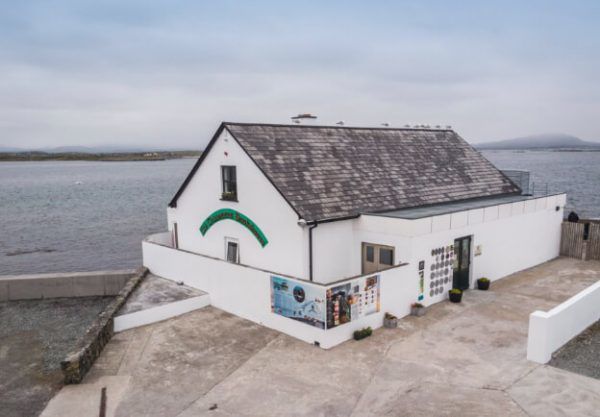
Ballyconneely was the preserve of the ‘Ferocious’ O’Flahertys, whose castle at the mouth of the Brandy River at Bunowen, built in the early sixteenth century, was the seat of the western branch of this notorious family. Donall O’Flaherty or Donall A Choghaid as he was nicknamed, married the celebrated Grace O’Malley or Granuaile, about whom much has been written, and they lived at Bunowen from circa 1540, raising two sons – Eoin and Murrough – and a daughter Margaret. Granuaile left Bunowen in 1550′s after her husband was killed.  The O’Flaherty castle was then occupied by the Geoghegans. Their descendant John Augustus O’Neill built a new castle residence at the foot of the Hill of Doon from the stones of the O’Flaherty castle at the mouth of the Brandy River which he was unable to complete . It was then bought by the Blakes of Towerhill in 1852 and used as a summer residence. It is now a ruin which you can view across the bay from the Connemara Smokehouse on Bunowen Pier.

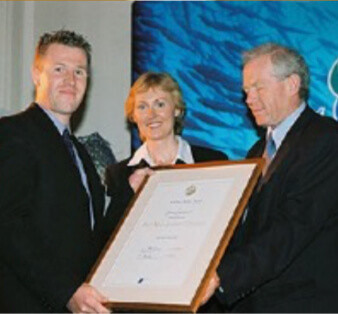
As part of the Ballyconneely Festival Anne Chambers gave a talk on GRANUAILE - THE WOMAN BEHIND THE LEGEND on Friday 6 August at 6pm in Ballyconneely Community Hall, Connemara. The celebrations drew a huge crowd of all ages and all walks of life. Locals and visitors to the area put on an entertaining performance on Granuaile of comical nature followed by a fancy dress kiddies disco.

Author Anne Chambers is the sole published biographical account of Grace O’Malley, sourced from original manuscript material, both in public and in private domain.  Anne is author of six biographies, historical novel, collection of short stories, film screenplays, stage and radio plays, Anne writes, lectures and has been interviewed around the world about her writing.

Her books have been made into Radio and TV drama-documentaries for Discovery Channel. Learning Channel, RTE etc and have been translated and published abroad. She has appeared regularly on radio and TV programmes, most recently on the BBC’s popular series Who Do You Think You Are, on Nationwide RTE I and RTE Lyric FM.

She was short-listed for the GPA Irish Book Awards (biography) and for the 2004 Irish Hennessy Literary Awards (short story).  She holds an MA in History from the National University of Ireland and is a member of the Irish Writers Union and the Irish Playwrights and Screenwriters Guild.

Over the years Anne’s name has become synonymous with GRACE O’MALLEY. Her biography of the Pirate Queen has become the inspiration for documentary film makers, composers and writers from a range of creative disciplines worldwide, as well as for students in all educational levels, both in Ireland and abroad.

Click on picture to view gallery…

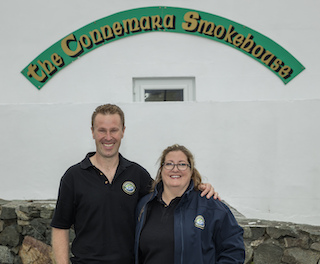
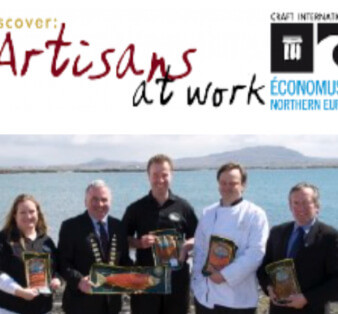
Anne Chambers and Roberts Children of Connemara Smokehouse

Click to view the celebrations.....


BOOKS BY ANNE CHAMBERS:

SHADOW LORD: Theobald Bourke -Son of the Pirate Queen

FINDING TOM CRUISE and Other Stories

AT ARM’S LENGTH: Aristocrats in the Republic of Ireland

LA SHERIDAN: Adorable Diva

RANJI MAHARAJAH OF CONNEMARA

ELEANOR: Countess of Desmond

THE GERALDINE CONSPIRACY(a novel)

Screenplays:

Screenplays

Plays:

MATRIARCHS :A Play in 2 Acts

COMING HOME: A Radio Drama

Walk of the week: Trá Mhóir and Bunowen, Co Galway

August 7th, 2010

Wild flowers thickly strewn across low green cliffs, larks in full song suspended on invisible wires over my head, and a blue summer sky above the Errismore peninsula of westernmost Connemara.

If I’d gone any further west, I’d have been on my way to America. But who’d want any such thing on an afternoon like this?

Down below the golf links, where the sward met the sand, a herd of brown and cream cattle moved with fantastic deliberation, contentedly munching a salad of grass, orchids and seaweed. No need to add salt to the butter hereabouts. Their hooves left deer-like slots in the pure white shell-sand.

The rocks lay blackened with algae, patched orange with lichens. When the Connemara sun shines like this, it passes everything through a colour filter of psychedelic intensity. Great tuffets of pink sea thrift sifted the afternoon breeze, the big powder-blue blooms of sea-holly rose from prickly collars of leaves, and the white sand under the waves gave the shallows a hue of jade green that the most brazen swimming pool manufacturer would blush to use.

I walked the strand of Trá Mhóir and the headlands beyond, looking out to a jigsaw of dark rocks and islets. Herring gulls skimmed the sea with creaky cries. A woman was hanging out her washing behind her white cottage, which looked out from its knoll over a pitch-encrusted pier and three red-and-blue trawlers.

There was a masterpiece right there, just waiting for an Impressionist to slouch by.

Crunching over carpets of sun-dried kelp as black and crisp as fried onions, I came to Bunowen Pier. A seductive smell of smoked fish and tarry rope hung round the Connemara Smokehouse. I’d put a bun in my pocket before setting out, in the hope of finding their door open.
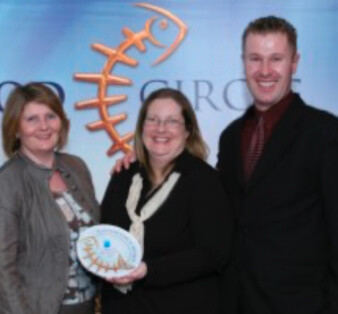
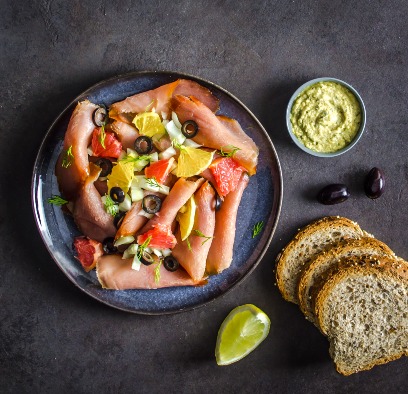
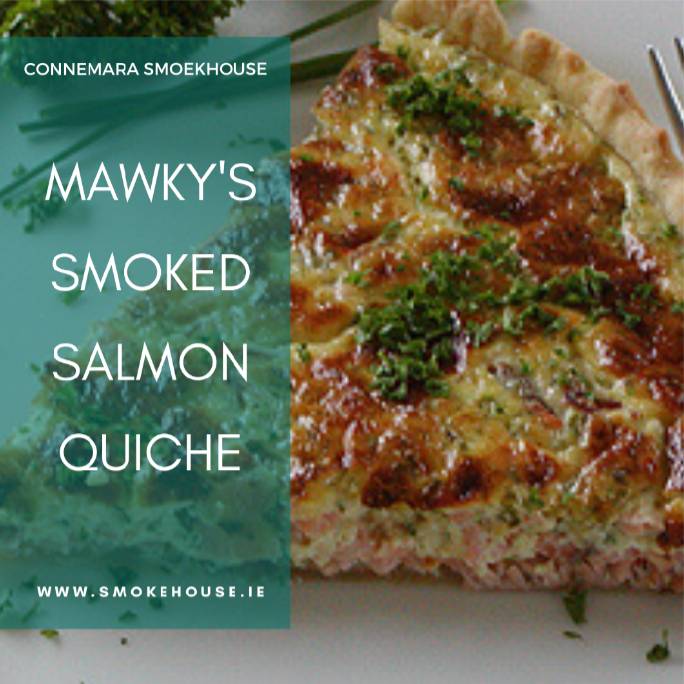
Resistance was useless. Smoked tuna and brown bread, eaten on the pier with legs a-dangling and a sight of the basalt plug of Doon Hill across the crescent of Bunowen Bay. You couldn’t beat that.

Up and on along the road, with the castellations and blank windows of Bunowen Castle rising under Doon Hill like something belonging to the Hammer House of Horror. The castle began life as an O’Flaherty stronghold, the most westerly one they possessed. In the 1550s it was the trading and freebooting base of the young Granuaile and her first husband, Dónal an-Chogaidh O’Flaherty. In the 19th century John Augustus O’Neill bankrupted himself turning the old house into a Gothic fantasy, and it’s been a ruin now for the past hundred years.

Opposite the castle lay Lough Caffrey, riffled by catspaws of wind. The claw-shaped lough has a great story attached, told by Tim Robinson in his admirable Connemara gazetteer.

After a massacre of the Conneelys of Ballyconneely by the O’Flahertys, the son of the sole survivor returned to wreak revenge at a time when An Bioránach, the O’Flaherty chief, was living on a tiny islet in Lough Caffrey.

Young Conneely (having first prudently practised his long-jumping) sprang from the shore on to the island in one tremendous leap, killed An Bioránach and reinforced his triumph by marrying O’Flaherty’s daughter. Ruthlessness, athleticism, murder and romance: the absolute cornerstones of Irish myth.

I passed the skeleton of the old factory where alginic acid was once processed from seaweed for the manufacture of (among other items) toothpaste and ice cream. Side roads snake among widely scattered houses in the low, rocky landscape of Errismore.

I followed them between boglands bright with yellow flags.

In the tiny, irregularly shaped pastures the ruins of houses crumbled and the stone walls let the sky through in shards of blue and white. A pure white mare came to show her nose over the wall, and her suede-brown foal put his silky muzzle up to be stroked.

Round the next bend I came on a Connemara roadblock. Half a dozen burly cows and their calves were munching their way up the boreen, an inch at a time. I was happy enough to sit on the wall and wait in the evening sun and wind for them to pass.

Christopher Somerville – Travel - Irish Independent

Open House on Paradores of Spain by Lorna Roberts at Barr an Bhaile

August 6th, 2010

Lorna held an “OPEN HOUSE” here in Ballyconneely at BARR AN BHAILE (on the road to the Connemara Golf Club) to hear more about Paradores and to enjoy some of the products from the CONNEMARA SMOKEHOUSE and some wine from MARQUES de CACERES in La Rioja. It was a wonderful success the 2nd event held by Lorna Roberts this summer.   Everyone were was busy trying to find information for the competition Lorna was holding.

Lorna Roberts, is the official Irish & UK representative for the Spanish Parador hotels. This is a group of 93 state owned hotels all over Spain, many of which are in historic buildings – castles, palaces, convents etc. Others are in nature reserves, Medieval villages and in idyllic coastal locations away from the resorts.

The Paradores have many SPECIAL OFFERS & PROMOTIONS.

They are affordable and are also a wonderful romantic settings for Honeymoons and Weddings or simply just to relax.

Lorna can check out the best deals available and help with route planning for those doing a fly drive holiday. She also accompanies small groups traveling around the Paradores.

Click on picture to view gallery…

Click to view...

Clifden Lifeboat Raft Race and Watersports Day

August 4th, 2010

This weekend past the Connemara Smokehouse took part in the Clifden Lifeboat Raft Race and Watersports Day.

Connemara Smokehouse Team

The Royal National Lifeboat Institution (RNLI) is a registered charity, its purpose very clear – to Save Lives at Sea. It provides the 24-hour on-call service to cover search and rescue requirements out to 100 nautical miles from the coast of the of Ireland and United Kingdom Republic

The RNLI is independent from Government and continues to rely on voluntary contributions & legacies for its income.
Since the RNLI was founded in 1824, its lifeboats have saved more than 137,000 lives.

Volunteer crew members readily exchange leisure, comfort and sleep for cold, wet and fatigue. Their lifesaving work is essential, often difficult and sometimes dangerous.
Situated in an area of spectacular scenery, Clifden lifeboat station provides search and rescue cover off the west coast of Ireland. The station operates two inshore lifeboats, a D class and a B class Atlantic 75.

Imagine for a moment that you’re part of the crew on a lifeboat. It’s 2.30am on a freezing January morning and the pager’s just woken you from a deep sleep in a snug warm bed. You then head out to sea in complete darkness and 10m waves rise and fall around you, ready to swamp you at any moment. Strong gale force winds throw the lifeboat around like a toy. A fishing trawler is in difficulties 23 miles out to sea.  Everyday people like you and me, volunteer to do this. These boys/girls put their own lives at risk when they go out in these conditions. Just remember they are volunteers, trained to save your life. Support the RNLI, support CLIFDEN RNLI LIFEBOATS & CREW

Click to view gallery.....


Open House on Paradores of Spain by Lorna Roberts at Barr an Bhaile

August 3rd, 2010

Lorna Roberts, is the official Irish & UK representative for the Spanish Parador hotels. This is a group of 93 state owned hotels all over Spain, many of which are in historic buildings – castles, palaces, convents etc.  Others are in nature reserves, Medieval villages and in idyllic coastal locations away from the resorts.

Lorna is holding “OPEN HOUSE – Tonight” 5th of August  at 8pm, here in Ballyconneely at BARR AN BHAILE (on the road to the Connemara Golf Club) to hear more about Paradores and to enjoy some of the products from the CONNEMARA SMOKEHOUSE , some wine from MARQUES de CACERES in La Rioja and a prize giving at the end of the night.

The Paradores have many SPECIAL OFFERS & PROMOTIONS.

They are affordable and are also a wonderful romantic settings for Honeymoons and Weddings or simply just to relax.

Lorna can check out the best deals available and help with route planning for those doing a fly drive holiday. She also accompanies small groups traveling around the Paradores.

To learn more please come to her Parador Evening…

Or

To see more: www.lornarobertsholidays.com or email: lorna@lornarobertsholidays.com

View

Barr an Bhaile, Ballyconneely, Co Galway, Ireland in a larger map

Irish interplay – Irische Wechselspiele

July 30th, 2010
Neue Zürcher Zeitung – Andrea Kucera Swiss Journalist visits Connemara Smokehouse

The counties of Galway and Mayo are in many respects a treasure trove. The region northwest of Galway on Ireland’s west coast is a paradise for nature lovers. Their summits are ideal for walking, its lakes for fishing and the coast with its beaches and coves to relax.

The natural phenomenon occurs on the coastal road heading west, halfway between Galway and Clifden: Just now the sun has shone, now brewing in the north, against the backdrop of the mountains of Connemara National Park, suddenly a storm together. The first drops of rain pattering down on the windscreen, while the sky is blue. Since stretches at a time on before our very eyes, a rainbow, as he is otherwise only known from picture books: a flawless semi-circular arc of rich, bright colors. As we go through a gate under him through it, into the barren moorland, yet lovely Connemara.

Family Tradition
The region on the west coast of Ireland in County Galway is a real natural water resources, because it is surrounded on three sides by water: in the south and west from the sea and on the east by a large lake, Lough Corrib. For centuries, Connemara was therefore practically accessible only by sea, the trip across country was extremely difficult because of the marshy subsoil. In the first half of the 19th Century, finally, the first roads built and opened a railway line between Galway and Clifden. This has now been put out of service again, however.

Passengers from Dublin and overseas who set out immediately to explore the remote area, were fascinated by their virginity and the hospitality of the people. Even during the great famine 1845-1849, the residents of Connemara have shared the little that remained for them, with foreign visitors.

Today is the grinding poverty of that time felt hardly anything. But from the affection of the area in which has largely preserved the Gaeilge. We meet on our journey again on villages in which the broken half of the residents speak English only. Many young Irishman also switch effortlessly between here Gaelic and English, which the Irishman during the colonial period was imposed by the English occupiers. Not least, the original character of this region also shows that most of the hotels, restaurants and other tourist facilities are small businesses that are run by families.

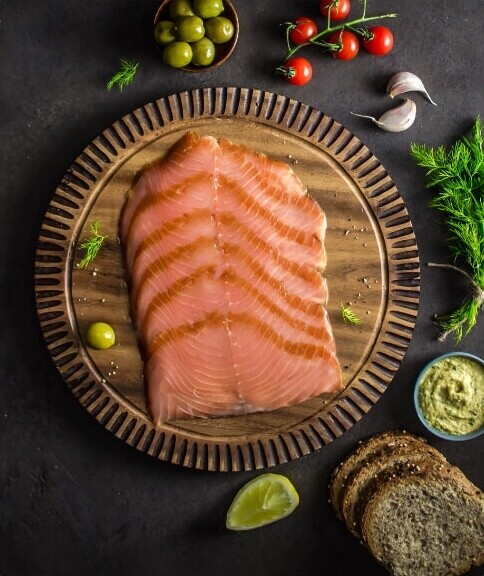
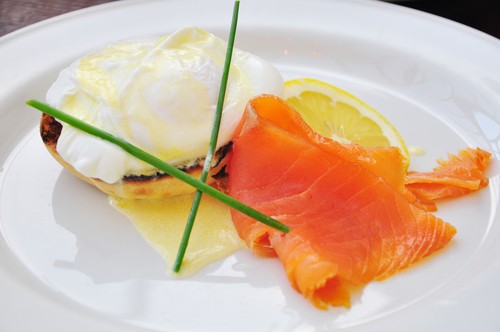
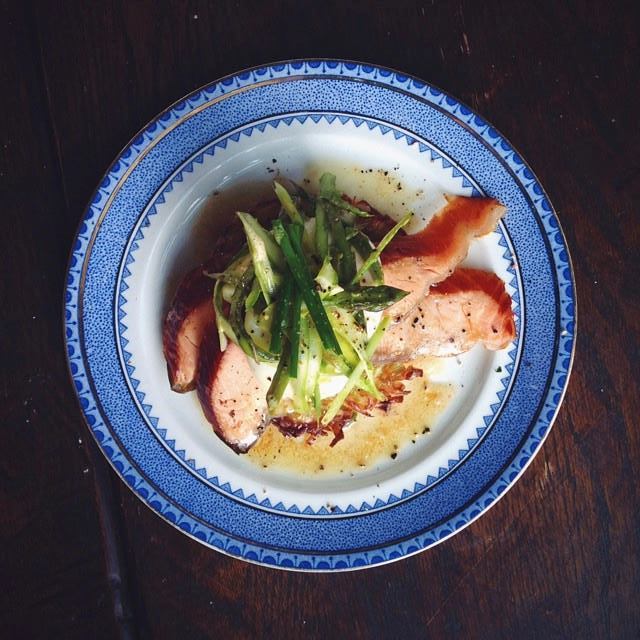
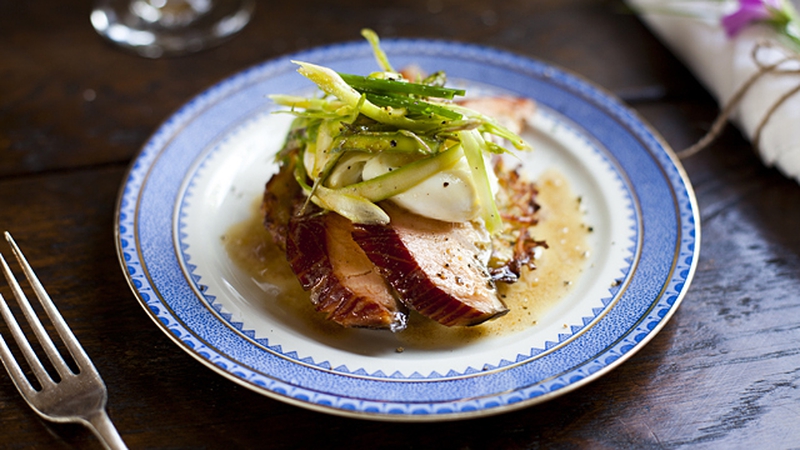
This also applies to the Connemara Smokehouse, where we arrive just before noon: the smokehouse since its founding in 1979, family owned and located by the sea, a few kilometers from the village of Ballyconneely from. Here is to be produced according to the famous London chef Rick Stein is the best smoked fish in Ireland. We are curious. Manager Graham Roberts welcomes us with a broad smile and a firm handshake. Although he is up since four o’clock on his legs, he has no trace of tiredness. He takes us through the operation and declared the process lasts seven to ten days: First, the fish – Graham used primarily salmon, tuna, mackerel and herring from local fishermen and breeding – filleted and drained with salt. After the salt is rinsed off, and the fillets are then smoked in the oven for 16 to 20 hours.

In most industrial enterprises in all these operations are automated. Here in the Connemara Smokehouse is, however, depending on the weather held and moisture content of the air from time to time how long to keep the fish in the oven. The difference is in taste: the smoked salmon has a pleasantly firm texture and tastes delicious – no comparison to the often greasy consistency of industrially produced smoked salmon.
www.smokehouse.ie

Irische Wechselspiele – Andrea Kucera

Die Grafschaften Galway und Mayo sind in mancherlei Beziehung eine Fundgrube

Die Gegend nordwestlich von Galway an Irlands Westküste ist ein Paradies für Naturliebhaber. Ihre Gipfel laden ein zum Wandern, ihre Seen zum Fischen und die Küste mit ihren Stränden und Buchten zum Verweilen.

Das Naturschauspiel ereignet sich auf der Küstenstrasse Richtung Westen, auf halber Strecke zwischen Galway und Clifden: Soeben hat noch die Sonne geschienen, nun braut sich im Norden, vor dem Hintergrund der Berge des Connemara-Nationalparks, plötzlich ein Gewitter zusammen. Erste Regentropfen prasseln auf die Windschutzscheibe nieder, während der Himmel blau ist. Da spannt sich auf einmal direkt vor unseren Augen ein Regenbogen auf, wie man ihn sonst nur aus Bilderbüchern kennt: ein makelloser halbrunder Bogen aus satten, leuchtenden Farben. Wie durch ein Tor fahren wir unter ihm hindurch, hinein in die karge und dennoch liebliche Moorlandschaft Connemaras.

Familientradition

Die Region an der Westküste Irlands in der Grafschaft Galway ist ein eigentliches Wasserschloss, denn sie ist auf drei Seiten von Gewässern umgeben: im Süden und im Westen vom Meer und im Osten von einem grossen See, dem Lough Corrib. Während Jahrhunderten war Connemara deshalb praktisch nur auf dem Seeweg erreichbar; die Reise über Land war wegen des moorigen Untergrundes äusserst beschwerlich. In der ersten Hälfte des 19. Jahrhunderts wurden schliesslich die ersten Strassen gebaut sowie eine Eisenbahnlinie zwischen Galway und Clifden eröffnet. Diese ist inzwischen allerdings wieder ausser Betrieb gesetzt worden.

Die Reisenden aus Dublin und Übersee, die sich alsbald aufmachten, um die entlegene Gegend zu erkunden, waren fasziniert von deren Unberührtheit und der Gastfreundschaft der Menschen. Selbst während der grossen Hungersnot zwischen 1845 und 1849 sollen die Bewohner Connemaras das wenige, das ihnen blieb, mit den fremden Besuchern geteilt haben.

Heute ist von der bitteren Armut dieser Zeit kaum mehr etwas zu spüren. Wohl aber von der Unberührtheit der Gegend, in der sich das Gälische weitgehend erhalten hat. Wir treffen auf unserer Reise immer wieder auf Dörfer, in denen die Hälfte der Bewohner nur gebrochen Englisch spricht. Viele junge Iren aber wechseln hier mühelos zwischen Gälisch und Englisch, welches den Iren während der Kolonialzeit von den englischen Besetzern aufgezwungen wurde. Nicht zuletzt zeigt sich der ursprüngliche Charakter dieser Region auch darin, dass der Grossteil der Hotels, Restaurants und anderen touristischen Einrichtungen Kleinbetriebe sind, die von Familien geführt werden.

Das gilt auch für das Connemara Smokehouse, wo wir kurz vor Mittag eintreffen: Die Räucherei ist seit ihrer Gründung 1979 in Familienhand und liegt direkt am Meer, wenige Kilometer von der Ortschaft Ballyconneely entfernt. Hier soll nach Angaben des berühmten Londoner Küchenchefs Rick Stein der beste geräucherte Fisch Irlands hergestellt werden. Wir sind gespannt. Geschäftsführer Graham Roberts empfängt uns mit einem breiten Lachen und einem kräftigen Händedruck. Obwohl er seit vier Uhr auf den Beinen ist, wirkt er keine Spur müde. Er führt uns durch den Betrieb und erklärt dabei den Räucherungsprozess, der sieben bis zehn Tage dauert: Zuerst werden die Fische – Graham verwendet hauptsächlich Lachs, Thunfisch, Makrelen und Hering von lokalen Fischern und Zuchten – filetiert und mit Salz entwässert. Danach wird das Salz abgespült, und die Filets werden anschliessend im Ofen während 16 bis 20 Stunden geräuchert.

In den meisten industriellen Betrieben sind all diese Arbeitsabläufe automatisiert. Hier im Connemara Smokehouse wird dagegen je nach Witterung und Feuchtigkeitsgehalt der Luft von Mal zu Mal entschieden, wie lange die Fische im Ofen bleiben müssen. Der Unterschied zeigt sich im Geschmack: Der geräucherte Wildlachs hat eine angenehm feste Textur und schmeckt köstlich – kein Vergleich zur oft schmierigen Konsistenz von industriell hergestelltem Rauchlachs.

Brandneue Velowege

Nun machen wir uns auf in nördliche Richtung, nach Westport, wo uns Travis Zeray für eine Velotour erwartet. Inzwischen scheint längst wieder die Sonne. Die Fahrt führt vorbei an den Twelve Bins, dem Gebirgszug, der dem Connemara-Nationalpark sein charakteristisches Gesicht verleiht. Für heute lassen wir die zwölf baumlosen, grasbewachsenen Gipfel aber links liegen. Wir werden später hierhin zurückkehren, um den Nationalpark – ein Wanderparadies – zu Fuss zu erkunden. Etwas weiter nördlich kommen wir alsbald am Lough Fee vorbei, an dessen Ufern Oscar Wildes Familie ein Haus besass. Der irische Schriftsteller soll hier in seinen jungen Jahren die Sommermonate mit Fischen und Jagen verbracht haben.

Kurz darauf passieren wir die Grenze zur Grafschaft Mayo, die nördlich an die Grafschaft Galway anschliesst. Die Gegend ist – wie übrigens auch Connemara – als Anglerparadies bekannt. Fischer aus der ganzen Welt reisen hierher, um in den vielen Flüssen und Seen Lachse, Forellen und Hechte zu fischen. Und auch Liebhaber der Hochseefischerei kommen hier auf ihre Kosten. Schliesslich entdecken wir weiter nordwärts plötzlich Veloweg-Schilder am Rand der Strasse – ein sicheres Zeichen, dass wir uns Westport, dem Ziel unserer Reise, nähern. Vor einem Jahr haben die lokalen Behörden damit begonnen, auf den Überresten der früheren Eisenbahnlinie zwischen Westport und Achill Velowege zu bauen. Sie sollen die Gegend um die Clew Bay – eine Bucht mit Hunderten von kleinen Inseln – touristisch aufwerten.

Teile der Stadt und einige umliegende Vororte sind bereits durch den sogenannten Greenway erschlossen; Ende März wurde ein weiteres 18 Kilometer langes Teilstück fertiggestellt. Dank Travis Zeray, der vor kurzem in Westport einen Veloverleih eröffnet hat und über die neu erstellten Velowege bestens informiert ist, sind wir die Ersten, die den frisch geteerten Veloweg benutzen. Noch stehen entlang der wunderschönen Strecke mit Blick auf das Meer vereinzelt Bagger herum. Bis zum Sommer – der Hauptsaison für den Tourismus – werden sie aber verschwunden sein.

www.smokehouse.ie